
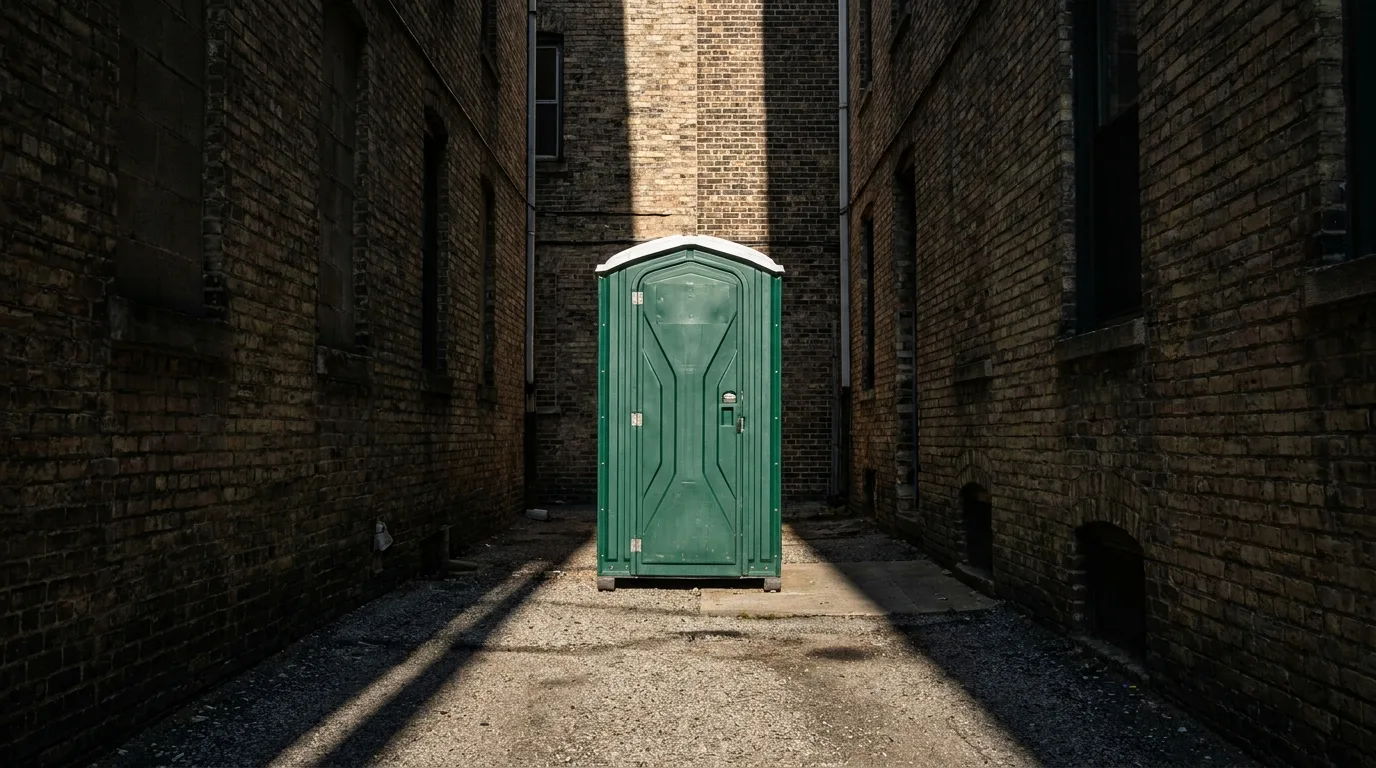
How Do Porta Potties Work?
There's no flush, no pipe running to a sewer line. A standard unit is a self-contained box, about 44 by 48 inches on the ground and 92 inches tall, with a holding tank underneath the seat. When you use it, waste drops straight into that tank, where a blend of water and deodorizing chemical sits waiting. That chemical is the blue liquid you see sloshing at the bottom. It suppresses odor and starts breaking down solids between service visits. There's a vent stack built into the unit that lets gas escape upward instead of building pressure inside. Toilet paper goes in a small holder mounted on the wall. That's the whole mechanism: no water intake, no discharge line, nothing hooked to a septic tank cleaning chemical system or municipal sewer. For a construction worker running to a porta potty between shifts on a job site near Nellis AFB, 6.7 miles north of Sunrise Manor, the unit works the same whether it's parked on dirt, gravel or asphalt. Curious about setup details before you book? The porta potty placement guide covers ground clearance and access, and how many porta potties do I need walks through headcount math for a crew.
How Does a Portable Sink Work?
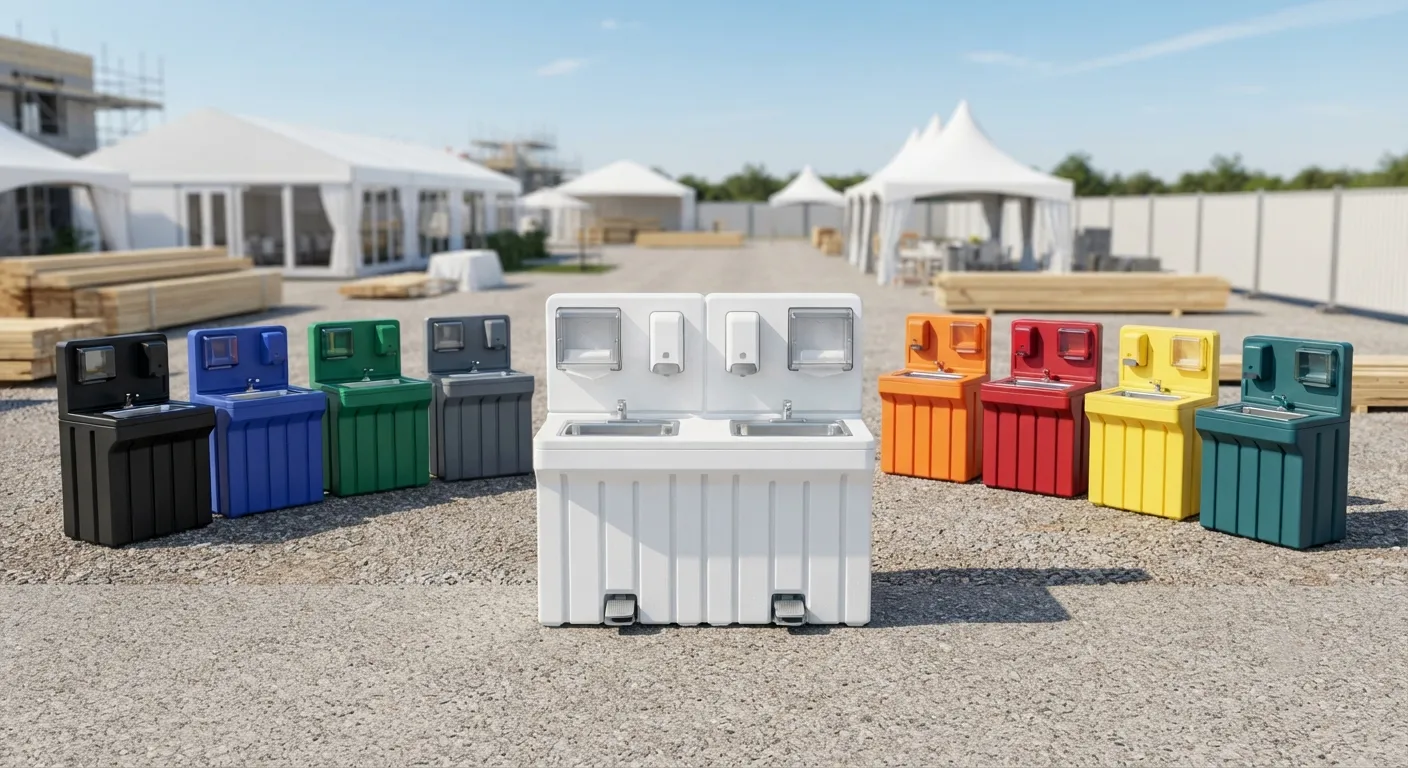
A portable sink runs on a fresh water tank and a foot pump or gravity valve, no plumbing hookup required. Water flows down into a basin, drains into a separate gray water tank underneath, and soap sits in a dispenser mounted to the unit. Under 29 CFR 1910.141(d)(2), handwashing setups need soap and a towel or air dryer, not just sanitizer, so most rental sinks come with both built in. These pair naturally with restroom rentals on food service or medical job sites. If your crew is applying paints, coatings or pesticides, OSHA 1926.51(f)(1) requires washing facilities specifically because those contaminants call for it. Anyone weighing options between a stationary sink and something simpler can check the handwashing station rental page or compare against a hand sanitizer station rental, which isn't a substitute where the OSHA washing rule applies. A portable sink rental works well next to a bank of standard porta potty rental units on a multi-week build.
Do Flushable Porta Potties Work Differently?
Yes. A flushable or deluxe unit uses a small onboard water tank and a hand pump or foot pedal to push a rinse of water into the bowl, carrying waste into the holding tank below, similar to a low-flow toilet at home. It still doesn't connect to sewer lines. The water tank just needs refilling during service, same as the holding tank needs pumping. These units often include a sink, mirror and interior lighting, which is why event planners lean toward them over standard models. A deluxe flushable porta potty makes sense for a wedding reception or a golf tournament where guests expect something closer to indoor plumbing. For larger gatherings, an 8 stall restroom trailer or 4 stall restroom trailer scales that same flushable technology up with multiple stalls and running water at every sink. Compare flushable against basic units on the porta potty rental cost page before deciding, since deluxe rentals run higher per day than a standard unit.
Do Camping Porta Potties Work the Same Way?
Not quite. Camping porta potties are small, portable, self-contained toilets you carry yourself, usually with a tiny waste tank and a separate flush water tank, built for one or two people over a weekend rather than a job site with dozens of workers. Rental units for campgrounds or RV sites scale that idea up, still sealed, still chemical-treated, just bigger and serviced by a route truck instead of dumped by hand. If you're organizing a group campout or an outdoor gathering near Sunrise Manor, the camping porta potty option handles higher traffic than a personal unit while working on the same no-plumbing principle. Anyone hosting overnight guests should also look at ADA accessible porta potty requirements, since ADA Standards section 213.2 requires that at least 5 percent of clustered single-user units be accessible, with a minimum of one no matter how small the cluster.

Frequently Asked Questions
Do porta potties need to be connected to plumbing?
No. Every porta potty is self-contained, holding waste in an internal tank rather than routing it through pipes. That's what makes them useful for construction sites, remote job sites, and events across Sunrise Manor where sewer access isn't available. Only flushable and deluxe models use any onboard water, and that's a separate rinse tank, not a plumbing connection.
What chemical do porta potties use?
Service crews use a blue deodorizing chemical mixed into the holding tank that breaks down waste and masks odor between pump-outs. It's added fresh at each service visit. Anyone searching "portable toilet chemicals near me" is usually a facility manager looking to buy chemical packets for a self-serviced unit rather than a rented one.
How often does a porta potty get serviced?
ANSI/PSAI Z4.3 sets one visit per week as the baseline for up to 10 users across a 40 hour week, though busier sites need more frequent stops. Sunrise Manor Porta Pros adjusts the route based on headcount and duration. Check how often are porta potties cleaned for details on scheduling around heavier use.
How many porta potties does a job site need?
OSHA 1926.51(c) sets the ratio: one toilet for 20 workers or fewer, then additional fixtures as headcount climbs past that. A crew of 15 near Winchester, 7.6 miles southwest of Sunrise Manor, typically needs just one standard unit. Larger crews should review OSHA portable toilet requirements before ordering.
Can I rent a porta potty for just one weekend?
Yes, short-term rentals are common for weekend events, weddings and small gatherings. Pricing runs higher per day than a weekly or monthly rental since delivery and pickup costs get spread over less time. Check porta potty rental per day or request a quote for a rate based on your event dates.
Next step
Get a delivery date
Tell us the address, the dates and the headcount. We size the order and confirm the route.